
|

Why Pocket Doors Are Making a Comeback in Modern Design
 Other News
Subscribe to FREE newsletter
Other News
Subscribe to FREE newsletter
| May 20, 2026 |
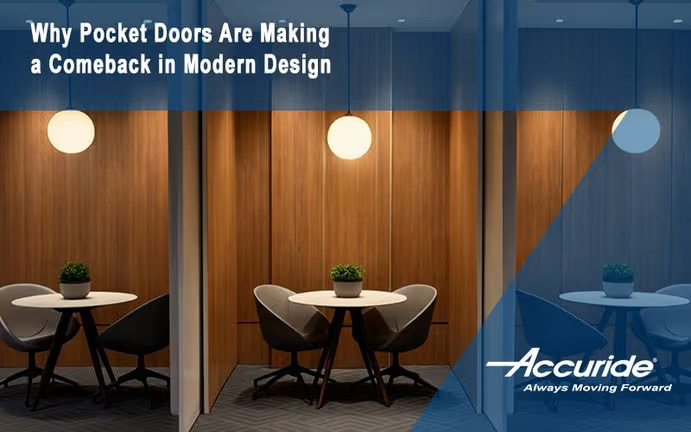
In today’s design landscape, space is no longer just about square footage, it’s about how efficiently that space is used. Across residential, hospitality, and mobile environments, designers are being challenged to do more with less, while still delivering clean, elevated aesthetics.
One solution that’s quietly making a strong comeback is the pocket door.
For many, pocket doors bring back memories of traditional cabinetry, like the classic entertainment centers built around CRT televisions, where doors could swing out and tuck away to reveal the screen. While those applications faded over time, the core idea never lost its value.
Today, pocket doors are being reintroduced in modern applications as a way to hide functionality, reduce visual clutter, and maximize usable space, without sacrificing accessibility.
The Shift Toward Hidden Functionality
Modern design is increasingly focused on simplicity. Clean lines, minimal hardware, and uncluttered surfaces have become the standard across kitchens, living spaces, and commercial environments.
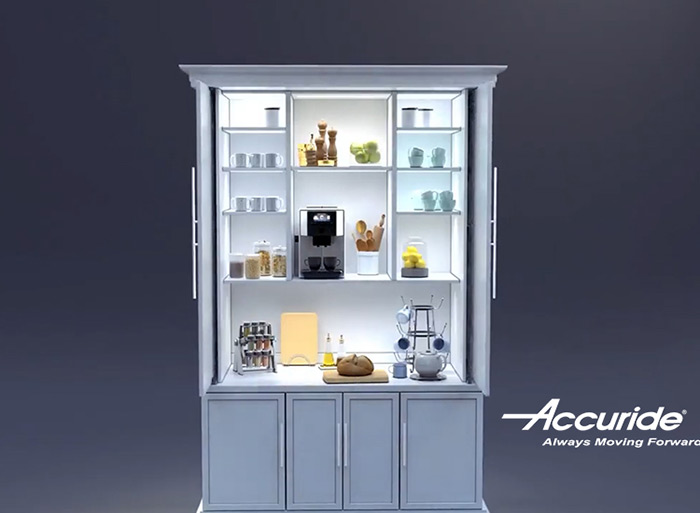
At the same time, functionality hasn’t gone away, it’s expanded. Coffee stations, appliance garages, workstations, storage compartments, and entertainment systems all need to exist within the same footprint.
Pocket doors solve this challenge by allowing these functional areas to:
- Disappear when not in use
- Maintain a seamless, integrated aesthetic
- Open fully, then retract out of the way for complete access
- This ability to combine form and function is a key reason pocket doors are gaining renewed attention.
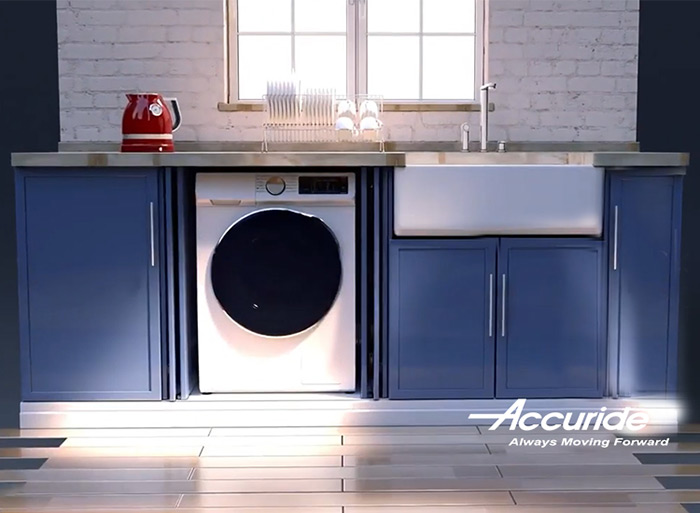
Maximizing Every Inch of Space
In environments like micro-living, hospitality, and RV design, space efficiency is critical. Traditional hinged doors can limit layout flexibility and require clearance that interferes with tight layouts.
Pocket door systems offer a more efficient approach:
- Doors open outward, then slide and store neatly within the cabinet
- Full access to storage when in use
- Clean, uninterrupted surfaces when closed
As designers look to maximize every inch, pocket doors enable more efficient layouts while maintaining a premium look and feel.
The Challenge: Scaling Beyond Small Applications
While pocket doors are not new, many legacy systems were designed for smaller, lighter doors, like those found in older furniture or cabinetry.
Today’s applications are pushing far beyond those limits.
Larger cabinetry, taller panels, and wider openings require systems that can handle:
- Increased weight
- Greater height and width
- Stable, controlled movement over time
Without the right hardware, larger pocket doors can feel difficult to operate, fall out of alignment, or lose the smooth, refined motion expected in modern designs.
Enabling Larger, More Functional Designs
This is where modern pocket door systems are redefining what’s possible.
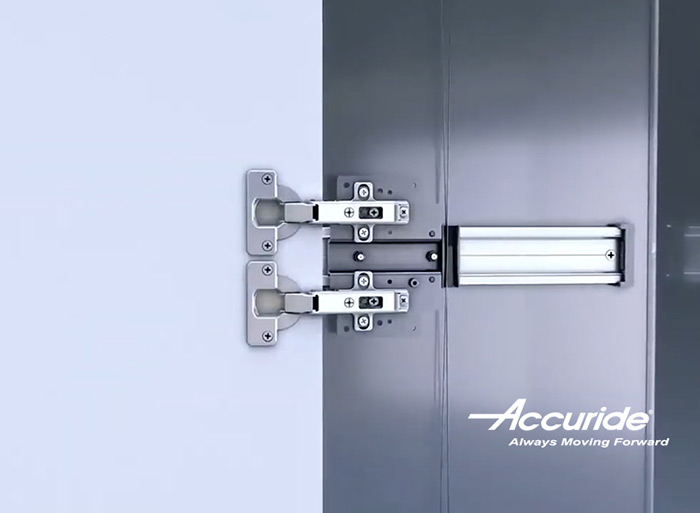
The Accuride AL1532 Pocket Door System was designed specifically to support this shift toward larger, more functional applications. With the ability to handle doors up to almost 10-feet tall and 100 pounds, it allows designers to extend pocket door concepts into
full-height cabinetry and larger architectural features.
Just as importantly, it maintains the experience designers expect:
- Smooth, controlled movement, even with larger panels
- Stable operation without racking or misalignment
- Soft, quiet closing for a refined finish
This combination allows pocket doors to scale with modern design needs, rather than being limited by them.
Designed for Real-World Use
As pocket doors expand into larger applications, ease of implementation becomes just as important as performance. Systems that are overly complex to configure or install can slow down production and introduce unnecessary challenges.
Modern systems address this by simplifying both setup and maintenance. The AL1532 supports:
- Streamlined configuration based on key door dimensions
- Preassembled components that reduce installation time
- Front-access adjustments for easier long-term maintenance
This makes it practical not just for one-off designs, but for repeatable use in manufacturing and production environments.
Where Pocket Doors Are Gaining Momentum
The resurgence of pocket doors is happening across multiple industries:
- Hospitality: Concealing minibars, wardrobes, and entertainment systems
- Residential: Appliance garages, pantry storage, and flexible living spaces
- Micro-living: Maximizing functionality in compact environments
- RVs and mobile spaces: Space-saving cabinetry with clean aesthetics
- Custom furniture and millwork: Hidden workstations and multi-use cabinetry
In each case, the goal is the same, create flexible spaces that can transform based on how they’re used.
A Modern Solution for Modern Spaces
Pocket doors are no longer just a legacy solution, they are becoming a core design strategy for modern environments where space, flexibility, and aesthetics all matter.
As applications grow larger and more complex, the systems behind these doors must evolve as well. Solutions like the Accuride AL1532 enable designers and manufacturers to take full advantage of this trend, supporting larger doors, smoother movement, and simpler implementation.
The result is a system that not only hides space, but helps define how that space is used.
@accurideus #accurideus #accuride #drawerslides #accurideslides

For other relevant searches, you might want to try: