
|


Choosing Between Mobile Barriers, Lead Doors, and Lead Curtains
April 28, 2026
Which Radiation Shielding Solution Fits Your Project?
Selecting the right radiation shielding approach is not only about protection. Many project challenges occur because different shielding products are treated as interchangeable when they serve very different roles.
In practice, issues arise when the selected solution does not reflect how the space will actually function. This article outlines when mobile barriers, lead lined doors, and lead curtains are appropriate, where they fall short, and how incorrect selection can lead to delays, added cost, or inspection issues.
Why Radiation Shielding Decisions Often Miss the Mark
In most cases, problems are not caused by incorrect calculations. They happen when real-world use of the space is not fully considered during planning.
Typical issues include:
- Selecting a fixed door before finalizing room layout
- Relying on movable shielding without clear procedures
- Using curtains without confirming exposure conditions
- Overlooking how staff and equipment move through the space
Radiation shielding must function as a coordinated system. Walls, doors, ceilings, and openings all need to work together. If one element is misaligned, gaps can compromise the entire assembly.
When Lead Lined Doors Are the Right Fit
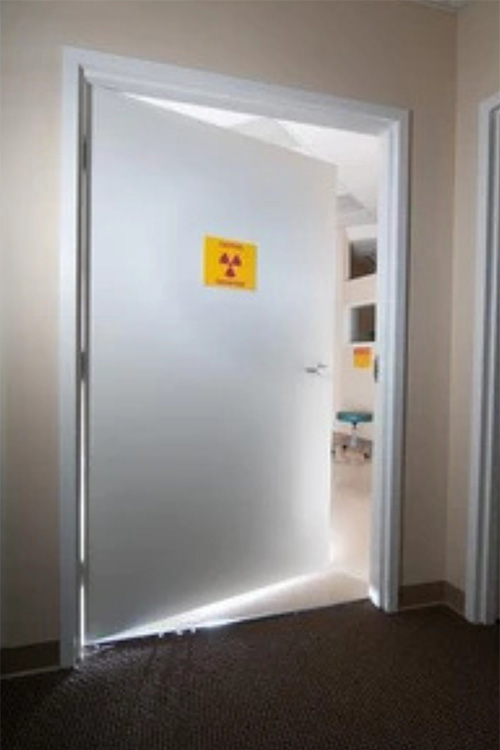
Lead lined doors are best suited for permanent spaces with stable layouts, such as diagnostic imaging rooms.
Because they remain fixed, they provide consistent coverage without relying on user interaction. When properly integrated, they form part of a continuous shielding system that is straightforward to verify during inspection.
Advantages of Lead Doors
- Fixed position provides consistent protection
- Integrates with surrounding wall assemblies
- Can include shielded viewing windows
- Easy to inspect and validate
Common Limitations
Challenges occur when doors are added late in the project. Changes in dimensions or swing direction can introduce gaps that are difficult to correct after installation.
Additionally, lead doors are not adaptable if the room layout changes in the future.
When Mobile Radiation Barriers Are More Appropriate
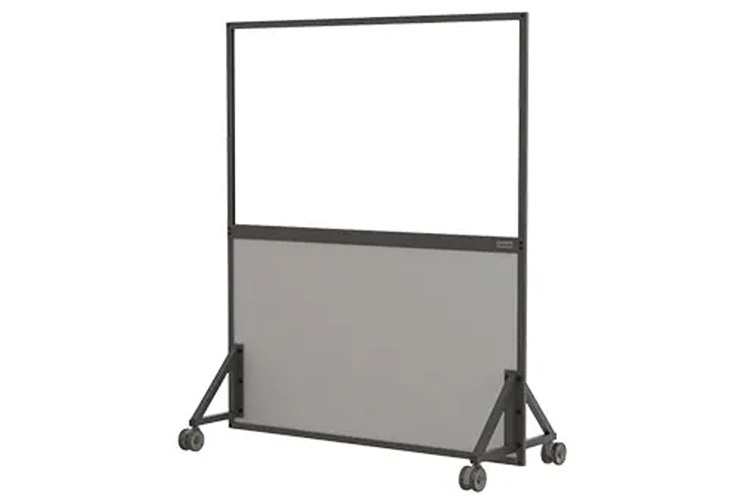
Mobile radiation barriers offer flexibility where spaces are temporary, multi-use, or still evolving.
They are most effective when their purpose is clearly defined within the workflow.
Suitable Applications
- Temporary shielding during renovations
- Protecting staff within active imaging rooms
- Multi-purpose rooms with changing layouts
- Projects with budget or construction constraints
- Environments expected to change over time
Mobile barriers allow shielding to be positioned as needed rather than fixed in place.
Key Considerations
Their effectiveness depends on correct placement. If not positioned properly, protection is reduced.
Height is also a factor. Most units do not extend to full ceiling height, which can leave exposure pathways if not addressed.
When Lead Curtains Are the Practical Choice
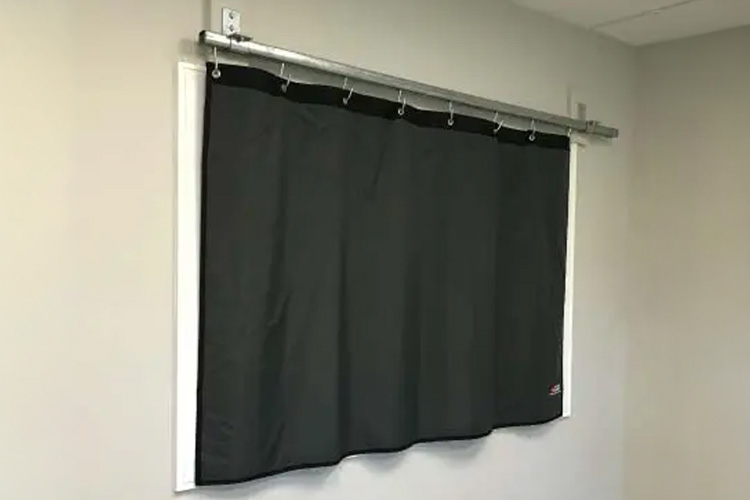
Lead curtains provide a flexible solution for lower exposure environments and situations where rapid installation is required.
They are often misapplied as replacements for solid barriers or doors.
Where Curtains Work Well
Curtains can cover larger vertical spans and are easier to install compared to rigid systems.
Where They Fall Short
Curtains must overlap correctly to maintain continuous coverage. They are not suitable for higher exposure environments where rigid shielding is required.
Misuse typically occurs when they are installed in place of permanent shielding elements.
Focusing only on upfront cost often leads to poor decisions.
The appropriate choice depends on how the space will be used over time.
Temporary solutions can be effective when used intentionally.
Problems arise when temporary solutions are left in place without reassessment as conditions change.
Effective shielding design must consider real-world movement patterns.
Key factors include:
Ignoring these considerations often results in late-stage adjustments and increased costs.
There is no single solution that fits every project.
In general:
Successful projects align shielding choices with both current use and future changes. When this alignment is achieved, installation is smoother and inspection outcomes are more predictable.
Cost Considerations in Shielding Selection
Temporary Versus Permanent Shielding
The Role of Layout and Movement
Making the Right Choice
#Ultraray #RadiationProtection #RadiationSafety #PureLead #SheetLead #Lead
Company:  Ultraray Group Inc
Product: Modular & Mobile Shielding
Source: https://ultraray.com/products/mobile-radiation-barriers/
Tags: