
|


Lead Rolls: Common Applications and Sizes
October 27, 2026
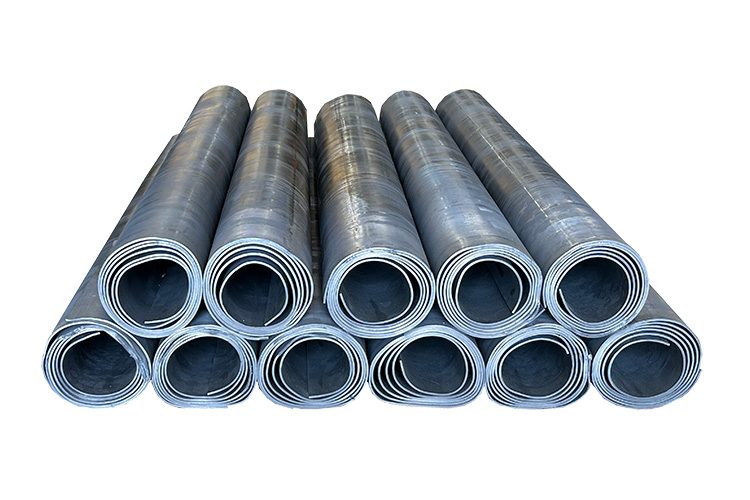
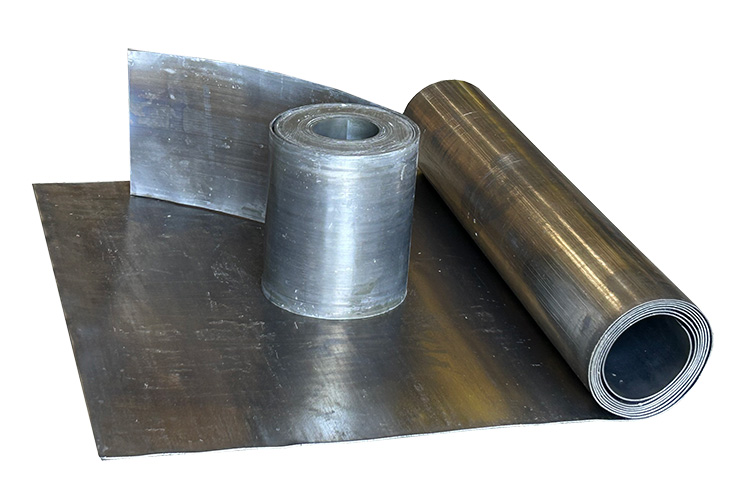
As you must know, lead rolls are simply sheet lead rolled up to optimize shipping & storagespace, and to make it easier to handle once delivered. It holds and maintains the same material properties as its sheet lead form. For example, lead maintains great density, malleability, corrosion resistance, and radiation shielding performance. This post covers the most common applications for lead rolls, its available standard sizes and thicknesses, and the custom fabrication options available for non-standard projects.
Common Applications for Lead Rolls
Radiation Shielding
In radiation shielding applications, lead rolls offer a practical format for lining walls, ceilings, and floors in medical imaging rooms, treatment facilities, and nuclear environments. The continuous roll format reduces the number of seams in a shielded assembly, which is an advantage because each seam requires careful overlapping to maintain shielding continuity.
Shielding thickness is determined by a qualified medical physicist or radiation safety officer based on the radiation source, energy level, and occupancy of adjacent spaces. Lead rolls should be installed with a minimum 1-inch overlap at all seams, with lead batten strips covering joints and lead caps over screws and other heads.
Acoustic Control & Soundproofing
Lead is a high-density material that resists the transmission of sound through walls, floors, and ceilings. Lead rolls are used in acoustic control applications where the continuous sheet format simplifies installation across large surface areas. The material adds mass to a partition assembly, which is the primary mechanism for reducing airborne sound transmission.
Acoustic applications for lead rolls include:
Lead rolls for acoustic applications are typically specified by weight per square foot rather than thickness, as mass is the governing performance variable. Rolls in the 1 lb/SF to 4 lb/SF range are commonly used in architectural acoustic assemblies.
Roofing and Flashing
Lead rolls are a preferred material for roofing and flashing applications in both new construction and heritage restoration. The continuous roll format reduces the number of joints in a flashing run, which directly reduces the number of potential leak points. Lead's natural malleability allows it to be formed around chimneys, valleys, pipe penetrations, parapets, and dormers without cracking or splitting.
Common roofing and flashing uses include:
For roofing applications, thicknesses of 1/16" to 1/8" are typical depending on exposure conditions and the architectural specification. Heritage and restoration projects often specify lead rolls to match original building materials.
DIY, Crafts, and Ballast
Beyond construction and shielding, lead rolls serve a range of specialised and hobby applications where dense, malleable, and corrosion-resistant material is required. The roll format is convenient for small-quantity purchases and on-site cutting to size.
Common non-construction uses include:
For these applications, thinner lead rolls in the 1/32" to 1/16" range are typically sufficient. Lead should always be handled with appropriate precautions regardless of application.
Lead Roll Sizes and Thickness Options
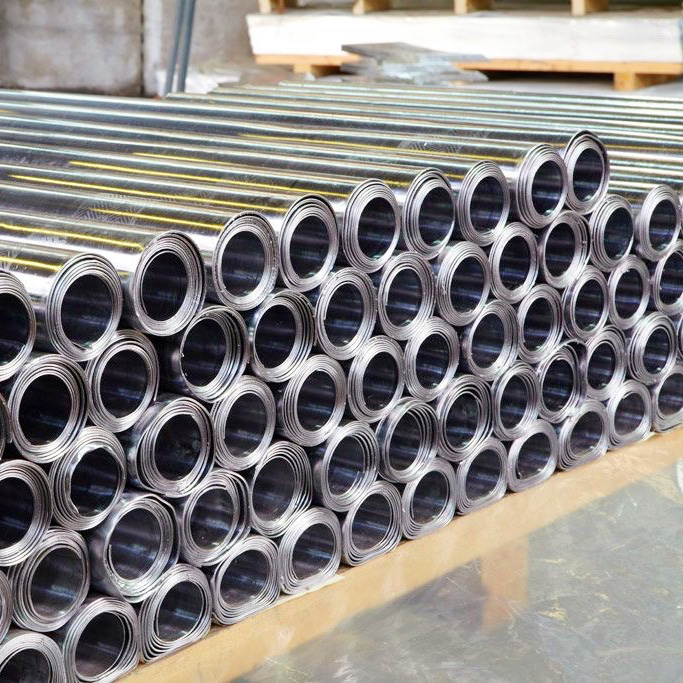
Lead rolls are available in the same thickness and dimension range as flat sheet lead. Standard sizes cover most project requirements, and custom dimensions are available for non-standard applications.
Standard Thickness, Size, and Weight Reference
|
Thickness |
Available Dimensions |
|
1/32" |
4' x 7', 4' x 8', 4' x 10' |
|
1/16" |
4' x 7', 4' x 8', 4' x 10' |
|
5/64" |
4' x 7', 4' x 8' |
|
3/32" |
4' x 7', 4' x 8' |
|
1/8" |
4' x 7', 4' x 8' |
|
1/4" |
4' x 4' |
Maximum standard dimensions reach up to 8 ft wide and 25 ft long. Custom sizes are available on request for projects with non-standard layout requirements or for large continuous surfaces.
Weight Reference
They are available across a weight range of 1 lb/SF to 60 lb/SF, corresponding to thicknesses from approximately 0.4 mm (1/64") up to 25.4 mm (1"). For most roofing, acoustic, and light shielding applications, rolls in the 1 lb/SF to 7.5 lb/SF range are appropriate. Heavier weights are used in radiation shielding and structural applications where greater density is required by the design specification.
Here are all weight results in pounds, grams, and kilograms for lead sheet sizes 4” x 7”, 4” x 8”, and 4" × 10" multiplied at the most common lead thickness pf 1/32”, 1/16", 5/64", 3/32", 1/8", and 1/4".
|
Sizes: Width x Height (inches) |
Thickness (inches) |
Weight (pounds) |
Weight (grams) |
Weight (kilograms) |
|
4” x 7” |
1/32" |
0.358 lbs |
162.6 g |
0.163 kg |
|
4” x 7” |
1/16" |
0.717 lbs |
325.2 g |
0.325 kg |
|
4” x 7” |
5/64" |
0.896 lbs |
406.5 g |
0.407 kg |
|
4” x 7” |
3/32" |
1.075 lbs |
487.8 g |
0.488 kg |
|
4” x 7” |
1/8" |
1.434 lbs |
650.4 g |
0.650 kg |
|
4” x 7” |
1/4" |
2.868 lbs |
1,300.8 g |
1.301 kg |
|
4” x 8” |
1/32" |
0.410 lbs |
185.8 g |
0.186 kg |
|
4” x 8” |
1/16" |
0.819 lbs |
371.7 g |
0.372 kg |
|
4” x 8” |
5/64" |
1.024 lbs |
464.6 g |
0.465 kg |
|
4” x 8” |
3/32" |
1.229 lbs |
557.5 g |
0.557 kg |
|
4” x 8” |
1/8" |
1.639 lbs |
743.3 g |
0.743 kg |
|
4” x 8” |
1/4" |
3.277 lbs |
1,486.6 g |
1.487 kg |
|
4" × 10" |
1/32" |
0.512 lbs |
232.3 g |
0.232 kg |
|
4" × 10" |
1/16" |
1.024 lbs |
464.6 g |
0.465 kg |
|
4" × 10" |
5/64" |
1.280 lbs |
580.7 g |
0.581 kg |
|
4" × 10" |
3/32" |
1.536 lbs |
696.9 g |
0.697 kg |
|
4" × 10" |
1/8" |
2.048 lbs |
929.1 g |
0.929 kg |
|
4" × 10" |
1/4" |
4.097 lbs |
1,858.3 g |
1.858 kg |
While we would love to include all sizes up to 12” x 12” and higher this blog would be as big as Ultraray’s lead roll inventory of 100 tonnes. So, feel free to use our free & interactive lead weight calculator tool to get an approximate weight estimate for your sheet size!
Custom Sizes and Fabrication
Standard lead roll dimensions cover the majority of project requirements, but not all. Ultraray offers custom-cut lead rolls and precision fabrication for non-standard widths, lengths, and thickness combinations. Custom formats are available for large-scale shielding installations, specialty acoustic assemblies, and OEM applications requiring consistent material dimensions across production runs.
Custom orders should be confirmed with Ultraray's team early in the project timeline to account for production scheduling and delivery.
Material Grades Available
Lead rolls are available in three material grades, each suited to different performance requirements:
All grades are supplied to ASTM B749 / QQ-L-201F standards. Certificates of Conformance are available on request.
Need lead rolls for your project? Contact Ultraray to request a quote.
Or, are you looking to calculate your own sheet lead roll size with our lead weight calculator? Click here to calculate your own measurements!
#Ultraray #RadiationProtection #RadiationSafety #PureLead #SheetLead #Lead
Company:  Ultraray Group Inc
Product: Shielding Materials & Fixtures
Source: https://ultraray.com
Tags: